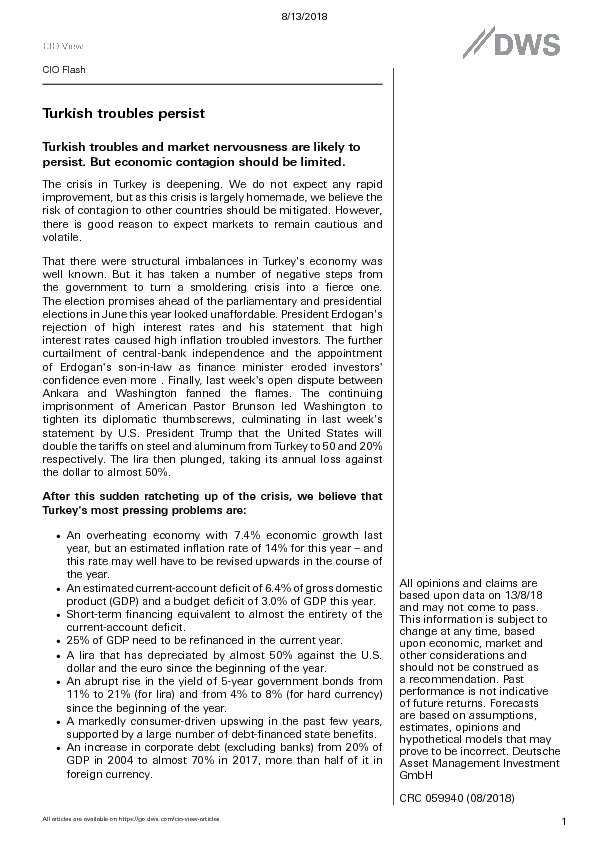
The crisis in Turkey is deepening. We do not expect any rapid improvement, but as this crisis is largely homemade, we believe the risk of contagion to other countries should be mitigated. However, there is good reason to expect markets to remain cautious and volatile.
That there were structural imbalances in Turkey's economy was well known. But it has taken a number of negative steps from the government to turn a smoldering crisis into a fierce one. The election promises ahead of the parliamentary and presidential elections in June this year looked unaffordable. President Erdogan's rejection of high interest rates and his statement that high interest rates caused high inflation troubled investors. The further curtailment of central-bank independence and the appointment of Erdogan's son-in-law as finance minister eroded investors' confidence even more . Finally, last week's open dispute between Ankara and Washington fanned the flames. The continuing imprisonment of American Pastor Brunson led Washington to tighten its diplomatic thumbscrews, culminating in last week's statement by U.S. President Trump that the United States will double the tariffs on steel and aluminum from Turkey to 50 and 20% respectively. The lira then plunged, taking its annual loss against the dollar to almost 50%.
Dit artikel verder lezen?
Abonneer en krijg toegang tot Investment Officer Nederland:
- Exclusief voor professionele beleggers
- Altijd opzegbaar
- Onbeperkt toegang: web, app, nieuwsbrieven en events
Registreer gratis en krijg toegang tot Investment Officer België:
- Exclusief voor professionele beleggers
- Altijd opzegbaar
- Onbeperkt toegang: web, app, nieuwsbrieven en events
Registreren duurt minder dan 1 minuut.
Geen betaalgegevens vereist